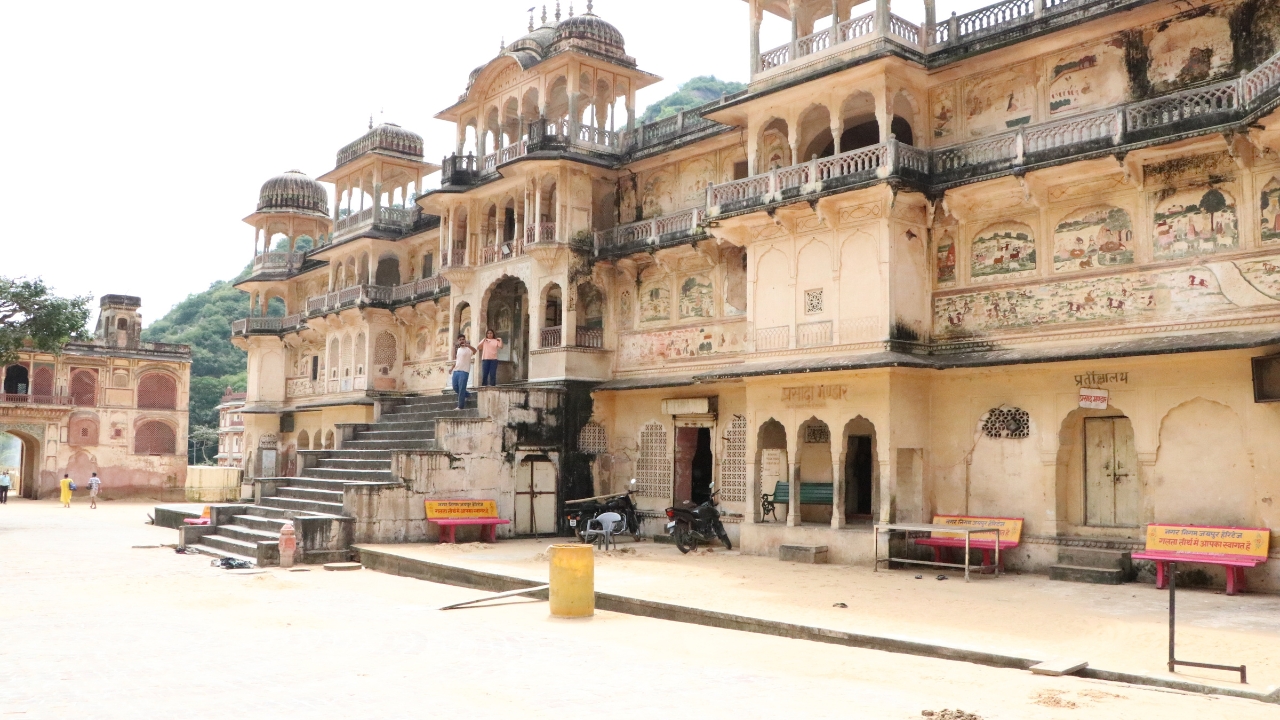
Hidden in the quiet foothills of Nahargarh Fort, just a short drive from Jaipur’s bustling old city, lies one of Rajasthan’s most serene and underrated heritage sites — Gaitor Ki Chhatriyan. This is the royal cremation ground of the Kachwaha Rajput dynasty, where the Maharajas of Jaipur were laid to rest, and where magnificent marble and sandstone cenotaphs were raised in their memory.
The word “Gaitor” is believed to be a local variation of “Gaye Ka Thor” — meaning the resting place of departed souls. And it lives up to that meaning entirely. Unlike the grand forts and palaces that draw massive crowds every day, Gaitor is a place of quiet grandeur. The atmosphere here is contemplative and still, filled only with birdsong and the rustling of trees — making it an almost meditative experience.
What greets you upon entry is nothing short of extraordinary. Around twenty ornate cenotaphs — locally called chhatris, meaning “umbrella” or “canopy” — rise from the ground in an open courtyard, each one a masterpiece of Rajput craftsmanship. Built from white marble and warm ochre sandstone, their domed rooftops and intricately carved pillars catch the light at every hour of the day differently. Walking through them feels like strolling through a gallery of miniature palaces, each telling a different chapter of Jaipur’s royal story.
Gaitor Ki Chhatriyan is Jaipur’s best kept secret — deeply historic, visually stunning, and refreshingly uncrowded.
When Maharaja Sawai Jai Singh II founded the city of Jaipur in 1727 and shifted his capital from Amber, he also designated a new sacred ground for the royal cremations of the Kachwaha dynasty. The site he chose was this sheltered valley at the base of the Aravalli hills — peaceful, naturally beautiful, and in keeping with Vedic traditions that placed cremation grounds near water bodies and away from the main settlement, facing a particular directional alignment.
From 1733 onwards, every ruler of the Kachwaha dynasty was cremated here, and a chhatri — a memorial cenotaph — was erected over the cremation site in their honour. Each chhatri was uniquely designed, reflecting the artistic sensibilities, cultural influences, and personal tastes of the era in which it was built. The result, over nearly two centuries of royal patronage, is a complex where no two cenotaphs look exactly alike.
There is one notable exception in the royal record: Maharaja Sawai Ishwari Singh, who was cremated at the City Palace complex rather than at Gaitor. His chhatri is therefore absent from the complex — a historical curiosity that guides and historians still discuss today.
The cenotaphs blend Rajput temple architecture with Mughal-influenced arcuate designs and Persian decorative motifs, making the complex a rare architectural document of the cultural cross-pollination that defined 18th and 19th century Rajputana. Faded traces of fresco paintings still visible on some walls offer a glimpse of how vibrantly decorated the complex once was in its prime.
| Category | Fee |
| Indian Adults | ₹30 per person |
| Foreign Adults | ₹100 per person |
| Children below 7 years | Free |
| Camera / Photography | Free (personal use) |
Gaitor Ki Chhatriyan offers exceptional heritage value at one of the lowest entry prices among all of Jaipur’s major monuments — making it an absolute must-visit for history and architecture lovers.
| Day | Timings |
| All Days | 9:00 AM – 5:00 PM |
The complex is open all seven days of the week throughout the year. It remains uncrowded on most days, making any morning visit a peaceful and unhurried experience.
October to March is the ideal season to visit Gaitor Ki Chhatriyan. The cool, clear weather makes it comfortable to explore the open-air complex at a leisurely pace, and the soft winter light on white marble is particularly beautiful.
Best time of day: Early morning — when soft golden light falls directly on the white marble cenotaphs, the complex is at its most photogenic and peaceful. By midday it can feel warm and exposed.
Special occasion: The death anniversary of Maharaja Sawai Jai Singh II in September draws a special gathering at Gaitor — a meaningful time to experience the site with a ceremonial atmosphere.
A chhatri is a dome-shaped elevated pavilion or cenotaph that serves as a memorial to royalty or prominent figures in Rajasthani and Mughal architecture. The word literally means “umbrella” — symbolising royal protection and honour even in death.
Gaitor Ki Chhatriyan is sometimes included under a separate composite ticket that covers the City Palace and associated royal sites. It is best to confirm at the City Palace ticket counter or with Jaipur Tour Planner for the latest composite ticket details.
About 1 to 1.5 hours is sufficient to explore the full complex comfortably — taking in all the cenotaphs, the garden, and the views at a relaxed pace.
Yes, the complex is entirely open-air, flat, and easy to walk through — making it very family-friendly. Children are free to enter, and the intricate stone carvings tend to captivate young visitors too.
It is both. While the complex is first and foremost a royal cremation memorial and heritage site, the adjacent Garh Ganesh Temple is an active place of worship. Visitors are welcome to pay their respects at the temple as part of their visit.
Maharaja Sawai Ishwari Singh was cremated at the City Palace complex rather than at Gaitor — the only Kachwaha ruler whose cenotaph is absent from this site. The exact historical reasons are debated, but the absence is one of the intriguing details that makes a guided tour of Gaitor especially interesting.
Yes, photography for personal use is freely allowed throughout the complex. The marble carvings and domed cenotaphs make for extraordinary photographs, especially in the morning light.
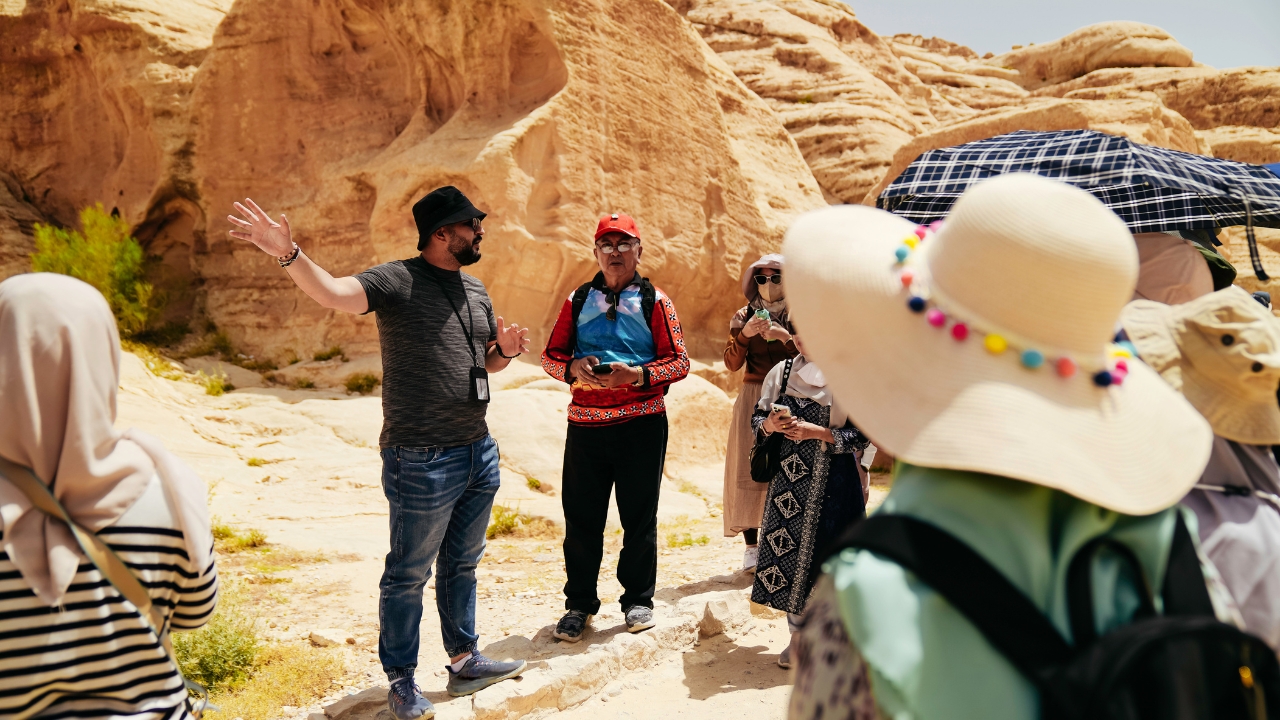
Local guides are available near the entrance. For a richer, more contextual experience of the royal history and architectural details of each cenotaph, Jaipur Tour Planner recommends booking a knowledgeable guide in advance through us.
Unlike most of Jaipur’s famous monuments, Gaitor is refreshingly uncrowded on most days — one of the biggest reasons seasoned travellers love it. You can explore the complex at your own pace without the rush of tourist crowds.
Comfortable walking shoes and modest clothing are recommended. As parts of the site are considered sacred, dressing respectfully is appreciated.
Address: Gaitor Ki Chhatriyan, Brahmpuri, Jaipur, Rajasthan – 302002 Nearest Landmark: Garh Ganesh Temple / Nahargarh Fort foothills

Nothing Match your search terms. Please try again with some different keywords.