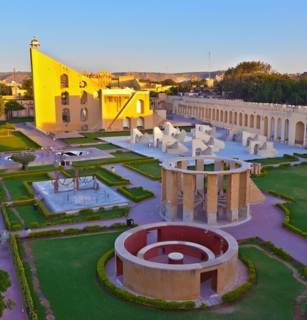
Located in the heart of Jaipur’s Pink City, Jantar Mantar Jaipur is one of the most fascinating scientific and architectural landmarks in India. Built by Maharaja Sawai Jai Singh II in the early 18th century, this remarkable observatory represents the advanced astronomical knowledge and scientific achievements of ancient India.
Recognized as a UNESCO World Heritage Site, Jantar Mantar Jaipur features a collection of massive astronomical instruments designed to observe celestial bodies, measure time, predict eclipses, and study the movement of stars and planets. Unlike modern observatories that rely on technology, Jantar Mantar demonstrates how precise astronomical calculations were performed using large stone structures centuries ago.
Today, Jantar Mantar attracts history enthusiasts, science lovers, students, photographers, and travelers from around the world who wish to explore one of the most unique attractions in Rajasthan.
Whether you are interested in astronomy, architecture, history, or cultural heritage, a visit to Jantar Mantar Jaipur offers an educational and unforgettable experience.
| Information | Details |
| Location | Jaipur, Rajasthan |
| Built By | Maharaja Sawai Jai Singh II |
| Built In | 1728–1734 |
| UNESCO Status | World Heritage Site |
| Famous For | Astronomical Instruments |
| Time Required | 1–2 Hours |
| Best Time to Visit | October to March |
| Ideal For | Families, Students, History Lovers, Photographers |
Jantar Mantar Jaipur is far more than a historical monument. It is a living example of India’s scientific excellence and deep understanding of astronomy.
The observatory contains some of the world’s largest stone astronomical instruments, each carefully designed to perform specific calculations related to celestial movements. Visitors can witness how ancient astronomers accurately measured time, tracked planetary positions, predicted eclipses, and studied the universe without modern technology.
One of the most remarkable aspects of Jantar Mantar is its ability to combine science, mathematics, architecture, and art into a single destination. The observatory demonstrates the vision of Maharaja Sawai Jai Singh II, who was passionate about astronomy and sought to improve existing astronomical calculations.
The site is also an excellent educational destination for students and researchers interested in astronomy, physics, mathematics, and history. Every instrument within the observatory has a specific purpose and offers fascinating insights into traditional scientific methods.
Its location near City Palace and Hawa Mahal makes it one of the most visited attractions in Jaipur and an essential stop during city sightseeing tours.
The history of Jantar Mantar Jaipur dates back to the reign of Maharaja Sawai Jai Singh II, the founder of Jaipur. A scholar, mathematician, and astronomer, Jai Singh was deeply interested in understanding celestial movements and improving the accuracy of astronomical observations.
During the early 18th century, astronomical tables used across different regions often produced varying results. To address these inconsistencies, Jai Singh studied astronomical systems from India, Persia, Europe, and the Islamic world.
Believing that large-scale instruments could provide greater accuracy than smaller metal devices, he commissioned the construction of several observatories across India. Among these, Jantar Mantar Jaipur became the largest and most advanced.
Construction began around 1728 and was completed over several years. The observatory eventually housed numerous instruments capable of measuring time, tracking planetary movements, calculating eclipses, and determining astronomical coordinates.
The scientific significance and architectural uniqueness of Jantar Mantar earned international recognition, and in 2010 it was designated as a UNESCO World Heritage Site.
Today, it remains one of the world’s most important historical observatories and a symbol of India’s scientific heritage.
The Samrat Yantra is the most famous instrument at Jantar Mantar and is considered the world’s largest stone sundial.
Standing approximately 27 meters high, this massive structure measures time with remarkable accuracy by observing the movement of shadows cast by the sun.
Visitors are often amazed by its size, precision, and scientific importance.
The Jai Prakash Yantra consists of hemispherical structures used to study the position of celestial bodies.
Astronomers could stand inside the instrument and observe astronomical coordinates directly, making it one of the most innovative devices within the observatory.
The Rama Yantra is designed to measure the altitude and azimuth of celestial objects.
Its circular structure allows astronomers to accurately determine the position of stars and planets in the sky.
This instrument was used to determine the coordinates of celestial bodies and study their movements relative to the Earth’s position.
Its design reflects the advanced understanding of astronomy achieved during Jai Singh’s era.
The Rashivalaya Yantra consists of instruments dedicated to observing zodiac constellations.
Each section was specifically designed to study different signs and celestial positions.
The Digamsha Yantra helps determine the azimuth or horizontal angle of celestial objects.
It was particularly useful for observing sunrise and sunset positions.
One of the most fascinating aspects of Jantar Mantar Jaipur is its architectural design.
Unlike conventional observatories, the instruments here are constructed using stone, marble, and masonry. Their large scale improves measurement accuracy and creates visually striking structures that resemble modern art installations.
The observatory represents a remarkable fusion of science, mathematics, engineering, and architecture.
Every instrument was carefully aligned according to astronomical principles, demonstrating extraordinary precision and craftsmanship.
Visitors can explore the observatory throughout the year.
Opening Hours
Timings may occasionally vary during special events or maintenance activities, so visitors are advised to confirm the latest schedule before planning their trip.
Entry charges may vary depending on visitor category and applicable government regulations.
Ticket categories generally include:
Travelers should verify the latest ticket information before their visit.
The ideal time to visit Jantar Mantar Jaipur is from October to March when the weather remains pleasant and comfortable for outdoor exploration.
Morning hours provide excellent lighting conditions and comfortable temperatures for sightseeing.
The winter months offer the most enjoyable experience due to clear skies and favorable weather.
Early morning and late afternoon are ideal for capturing photographs of the observatory’s unique structures.
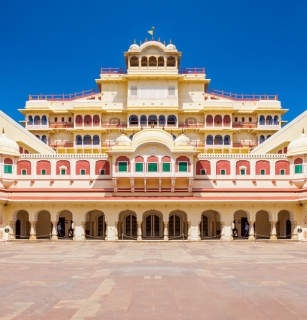
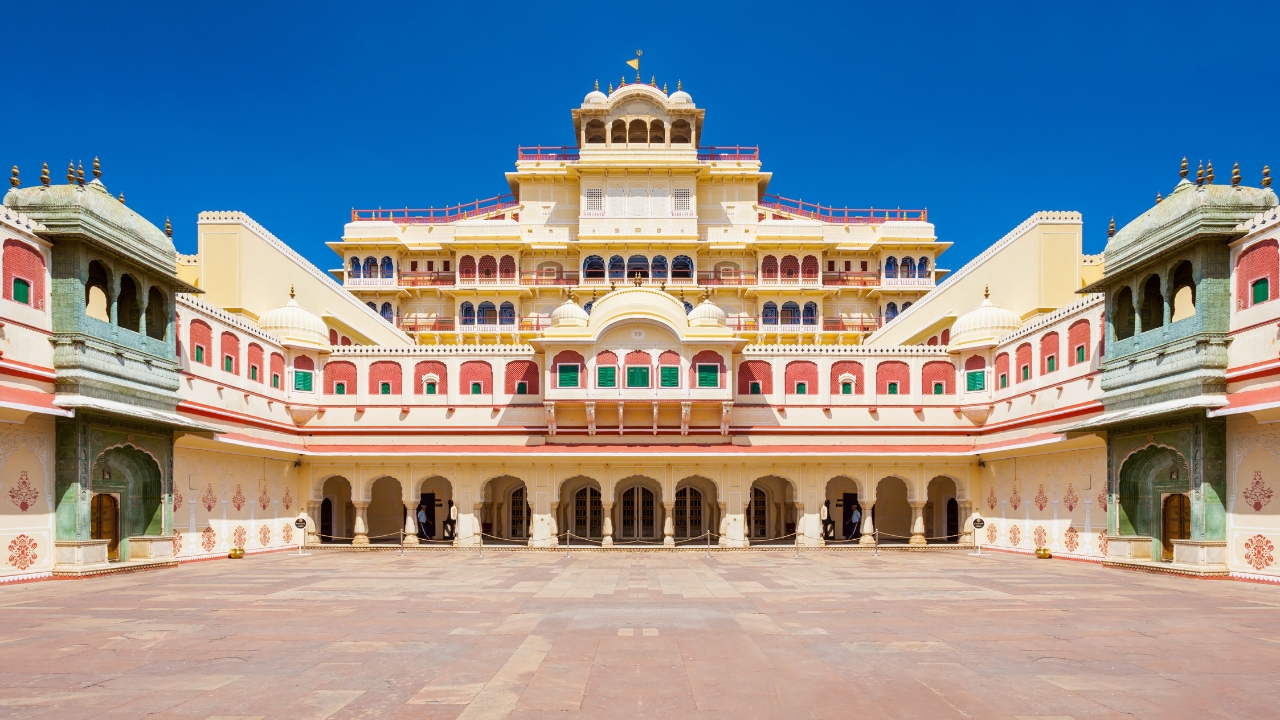
Located adjacent to Jantar Mantar, City Palace showcases Jaipur’s royal heritage, museums, courtyards, and historic collections.
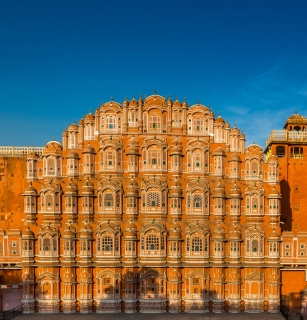
One of Jaipur’s most iconic landmarks, Hawa Mahal is only a short distance away and is famous for its intricate façade.
A vibrant shopping destination known for gemstones, jewelry, handicrafts, and traditional Rajasthani products.
A revered spiritual attraction visited by thousands of devotees each year.
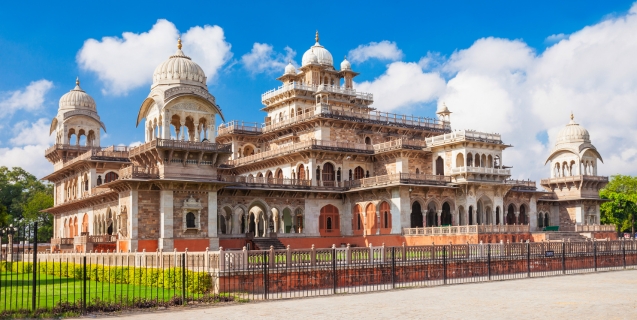
Rajasthan’s oldest museum featuring art, artifacts, and historical collections.
Absolutely.
Jantar Mantar Jaipur offers a rare opportunity to witness one of the world’s most extraordinary scientific monuments. The observatory combines history, astronomy, architecture, mathematics, and cultural heritage in a way that few attractions can match.
Visitors not only learn about ancient astronomical techniques but also gain appreciation for India’s scientific achievements centuries before the advent of modern technology.
Its UNESCO status, educational value, and central location make it one of Jaipur’s must-visit attractions.
It is famous for its large astronomical instruments and scientific significance.
Maharaja Sawai Jai Singh II built the observatory during the 18th century.
Yes, it was designated a UNESCO World Heritage Site in 2010.
Most visitors spend between one and two hours exploring the site.
The Samrat Yantra is the largest and most famous instrument within the observatory.
The observatory is generally open from 9:00 AM to 5:00 PM.
Yes, photography is generally permitted for visitors.
October to March is considered the ideal season for sightseeing.
City Palace, Hawa Mahal, Johari Bazaar, Govind Dev Ji Temple, and Albert Hall Museum are nearby.
Yes, Jantar Mantar is included in most Jaipur sightseeing itineraries.
Explore one of India’s most remarkable scientific landmarks and discover the fascinating world of ancient astronomy through a visit to Jantar Mantar Jaipur. From giant astronomical instruments and UNESCO-recognized heritage to centuries of scientific achievement, the observatory offers an unforgettable experience for visitors of all ages.
Whether you are interested in history, science, architecture, or photography, Jantar Mantar Jaipur remains one of the most rewarding attractions in the Pink City.
2 Days Tour

3 Days Tour

One Day Tour

Day Tour

One Day Tour
One Day Tour

One Day Tour