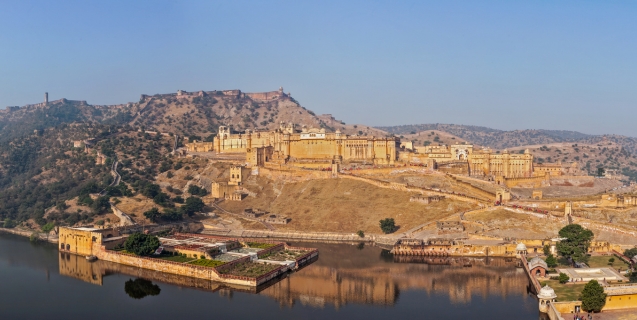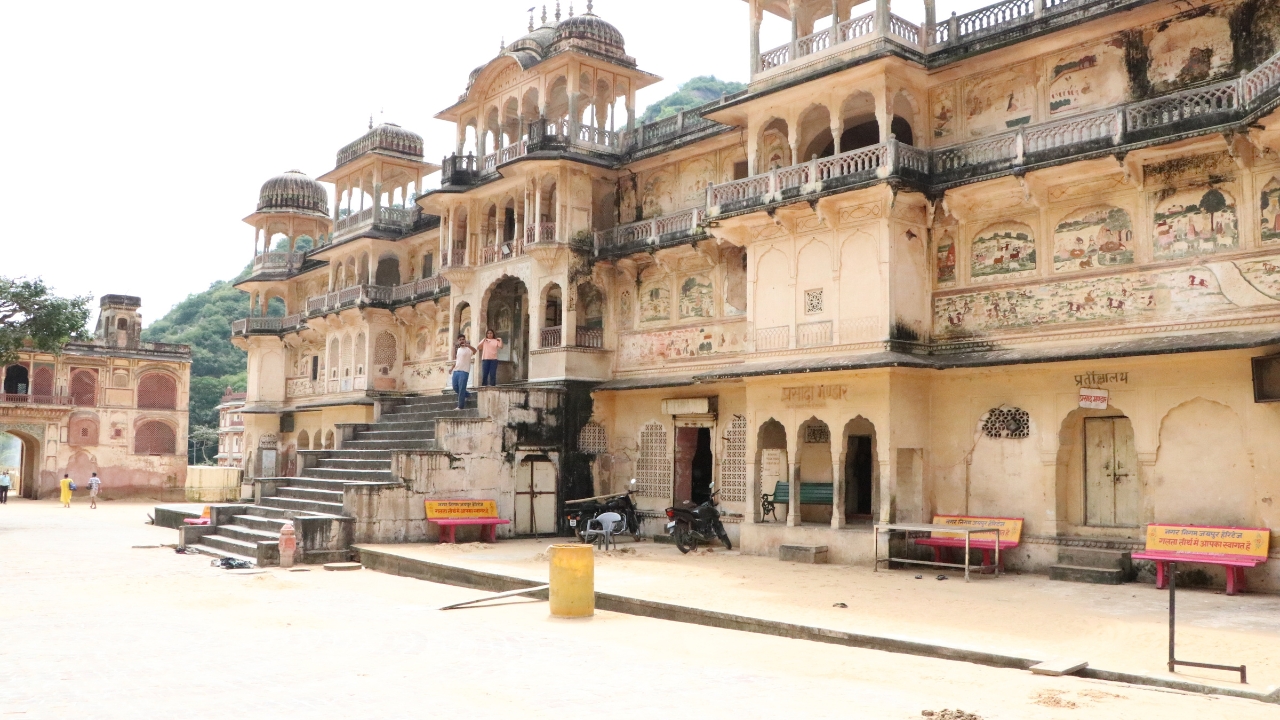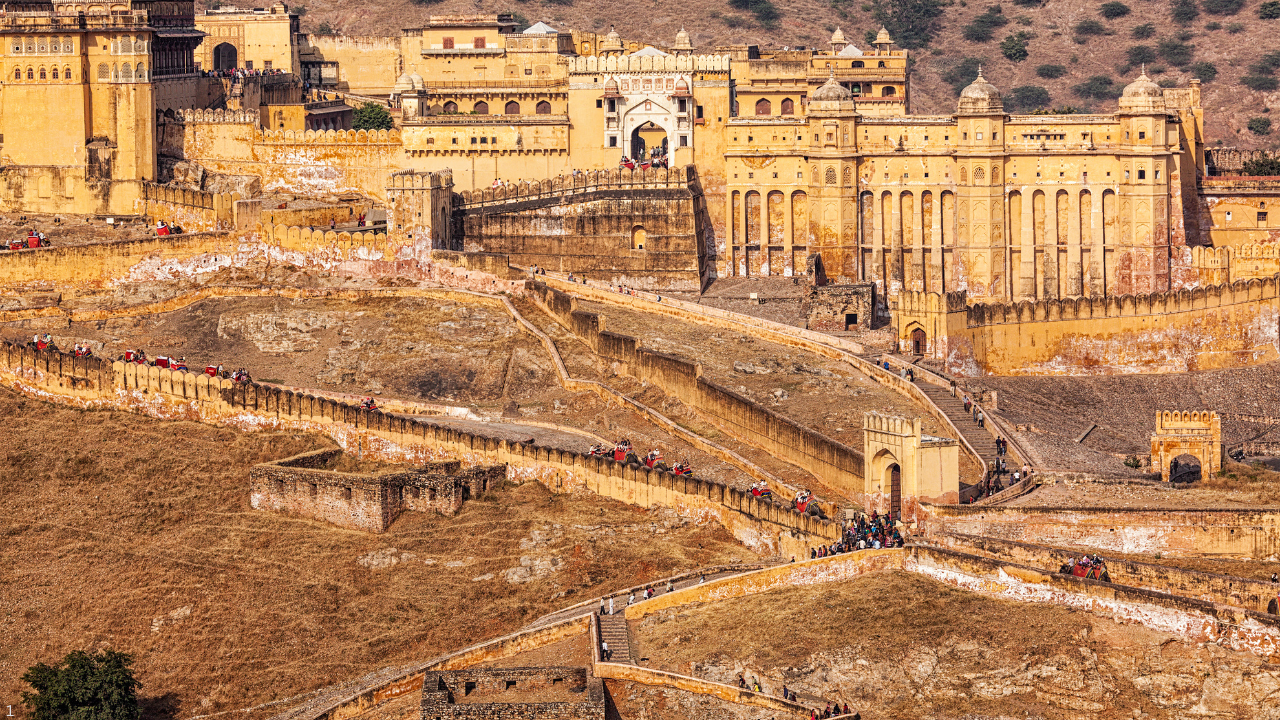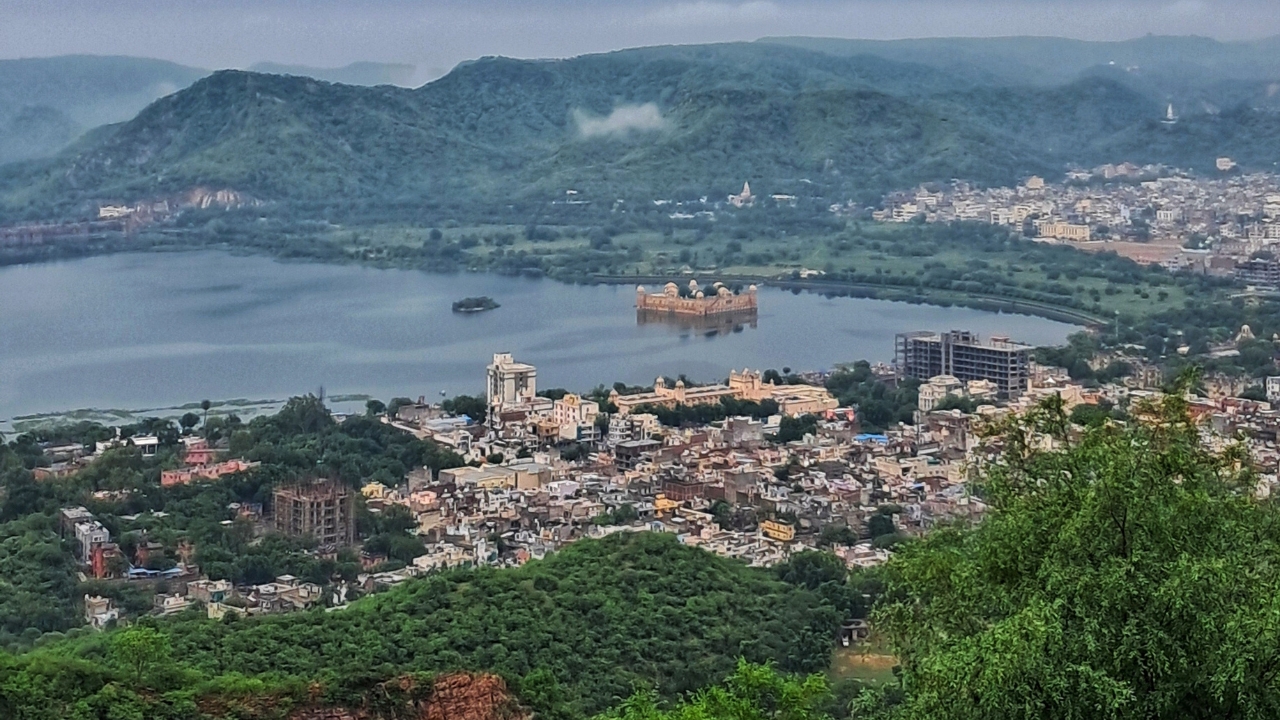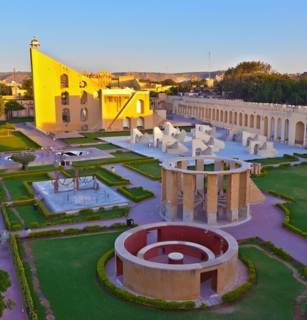
Rising dramatically above the Aravalli hills, Jaigarh Fort is one of Rajasthan’s most powerful and well-preserved military fortresses. Nicknamed the “Fort of Victory,” it stands tall on the Cheel ka Teela — the Hill of Eagles — overlooking the iconic Amer Fort and the Maota Lake below.
Literally meaning “Victory Fort,” Jaigarh was built to protect Amer Fort and its enormous palace complex from enemy invasions. Unlike Amer Fort, which dazzles visitors with ornate mirror palaces and intricate carvings, Jaigarh is a fortress built purely for military dominance — and it shows in every wall, tower, and cannon it houses.
Built in 1726 by Maharaja Sawai Jai Singh II, the fort served as both a military stronghold and, according to legend, a treasury where royal wealth was stored. Construction of the fort’s earliest structures dates even further back — Raja Kakil Dev is said to have begun work on Jaigarh around the eleventh century, after capturing the Amber region from the Mina tribes.
Stretching 3 kilometres in length and roughly 1 kilometre in width, the fort is constructed entirely from red sandstone and reflects a commanding Indo-Persian military architectural style, complete with thick walls, watchtowers, bastions, and turrets.
What makes Jaigarh truly extraordinary is its unblemished military record. The fort is famously known as the “Victory Fort” because it was never conquered by any enemy — making it the strongest of Jaipur’s three great forts.
While Amer Fort served as the royal residence of the Kachwaha rulers, Jaigarh Fort was its fierce protector — a dedicated military fortress equipped for war, sieges, and the storage of arms.
During the reign of Mughal Emperor Shah Jahan, the cannon foundry at Jaigarh was considered the most efficient in the world. It was here that the legendary Jaivana Cannon was cast — a feat of engineering that still astonishes visitors today.
The fort also holds a fascinating modern chapter. There were persistent rumors that a vast treasure belonging to the Kachwaha dynasty was hidden within the fort, including inside its massive water tanks. This led to an extensive — and ultimately fruitless — search ordered during Indira Gandhi’s Emergency in 1975–77, followed by another search by the Income Tax department using metal detectors in 1977. No treasure was ever found, but the legend lives on.
| Category | Fee |
| Indian Adults | ₹150 per person |
| Indian Children (5–12 years) | ₹75 per person |
| Indian Students (with valid ID) | ₹50 per person |
| Children below 5 years | Free |
| Foreign Adults | ₹200 per person |
| Foreign Children (5–12 years) | ₹100 per person |
| Foreign Students (with valid ID) | ₹100 per person |
| Still Camera | ₹50 |
| Video Camera | ₹200 |
Jaigarh Fort is open every day of the week from 9:00 AM to 6:30 PM. The fort is open year-round, though it remains closed on Holi (Dhulandi day).
The best time to visit Jaipur — and Jaigarh Fort — is between October and March, when the weather is cool and pleasant. This is peak tourist season, so expect crowds on weekends.
Best time of day: Early morning (9–11 AM) for cooler temperatures and golden light on the red sandstone. Avoid midday in summer months.
Yes, the fort is open all days of the week, throughout the year — except on Holi (Dhulandi day).
Can I visit Jaigarh Fort and Amer Fort on the same day?
Absolutely. The two forts are very close to each other and most visitors cover both in one day. They are also connected by pathways and underground passages, adding to the adventure of exploring both.
Is Jaigarh Fort included in the composite Jaipur ticket?
No. Jaigarh Fort is privately managed and requires a separate entry ticket purchased at the gate.
Is the Jaivana Cannon really the world’s largest wheeled cannon?
Yes. Weighing 50 tonnes with a barrel length of 20 feet, the Jaivana Cannon is recognised as the world’s largest cannon on wheels.
Is there food available inside the fort?
There are small food stalls and snack stands inside the fort premises, though it is recommended to carry your own water, especially in warmer months.
How much time is needed to explore the fort?
Allow 2–3 hours to comfortably explore the fort, its museum, armoury, Jaivana Cannon, gardens, and viewpoints.
Is photography allowed?
Yes. Still camera use costs ₹50 extra and video cameras ₹200. Mobile phone photography is generally free.
Is the fort wheelchair accessible?
The fort has uneven stone pathways and significant inclines, making it challenging for wheelchair users. Comfortable walking footwear is strongly advised for all visitors.
Are guides available at the fort?
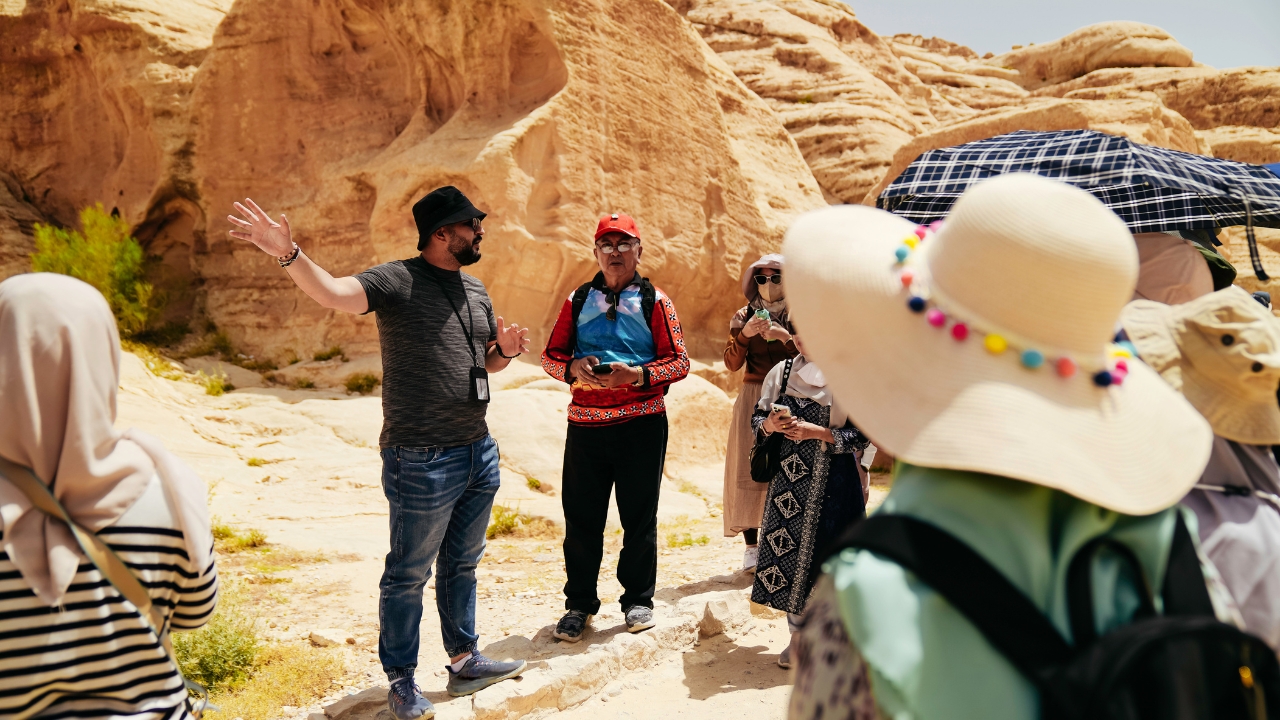
Local guides can be hired at the entrance gate and are highly recommended to fully understand the fort’s history, legends, and architecture.

Nothing Match your search terms. Please try again with some different keywords.