About Jal Mahal
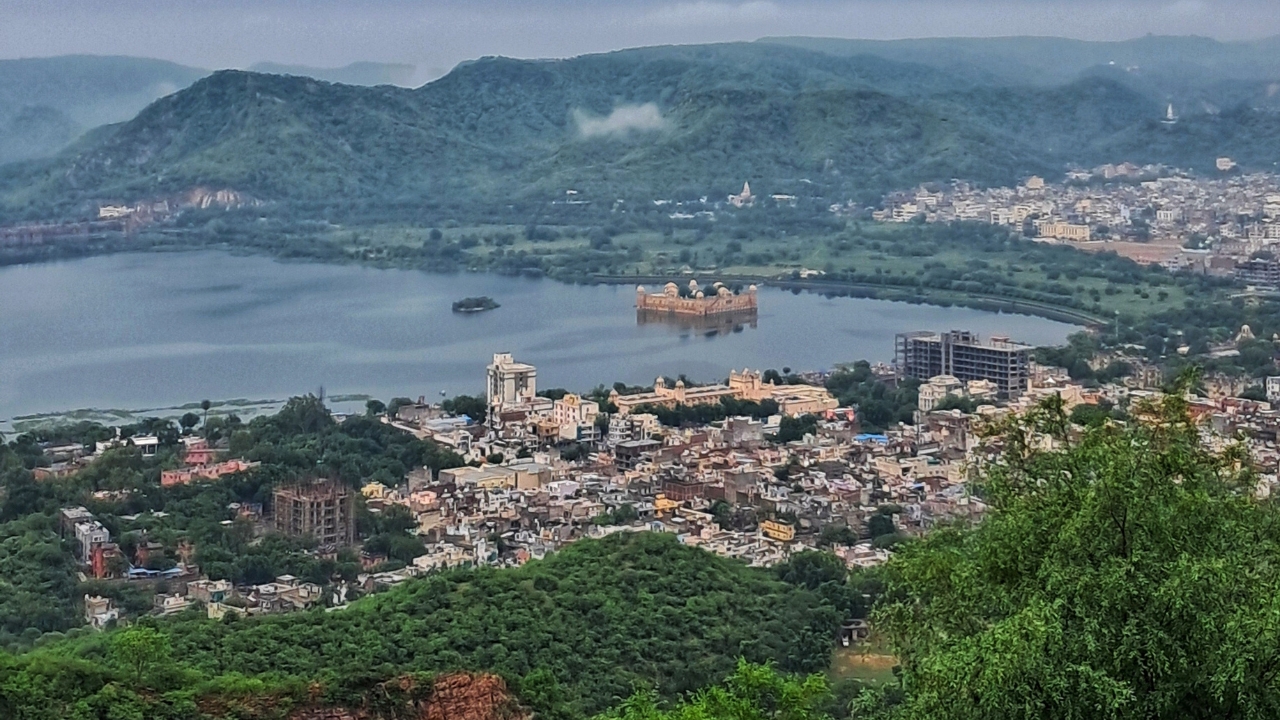
There are palaces that impress, and then there are palaces that leave you speechless. Jal Mahal belongs firmly in the second category. Rising silently from the still waters of Man Sagar Lake on the outskirts of Jaipur, this extraordinary five-storeyed palace appears to float — a vision of red sandstone, domed pavilions, and royal elegance suspended between water and sky. It is, without question, one of the most breathtaking sights in all of India.
The name says it all — “Jal” means water, “Mahal” means palace. But no translation quite captures the experience of seeing it for the first time. With the ancient Aravalli hills rising green and majestic behind it, and the calm surface of Man Sagar Lake stretching out in front, Jal Mahal sits at the intersection of natural beauty and royal grandeur in a way that photographs can hint at but never fully convey.
What makes Jal Mahal uniquely fascinating is that it is fundamentally a palace of illusion. The structure has five full storeys — but when the lake is at its fullest, four of them vanish beneath the surface, leaving only the uppermost floor visible above the waterline. The palace does not float — it stands firmly on the lakebed — but the effect it creates is one of effortless, magical levitation. It is one of the most iconic visual experiences in Jaipur, and one that no visitor ever forgets.
Built from warm red sandstone rather than the pink sandstone used elsewhere in Jaipur, Jal Mahal holds its own distinctive identity in a city of extraordinary monuments. Its architecture blends Rajput craftsmanship with Mughal-inspired design — a reflection of the cultural synthesis that defined royal Rajasthan in the 18th century. The ornate chhatris at its corners, the carved balconies, the arched gateways, and the rooftop garden terrace all speak to a palace built not for war or governance, but purely for pleasure and peace.
Jal Mahal was built in the mid-18th century by Maharaja Madho Singh I as a personal retreat — a hunting lodge where the Maharaja and his royal entourage could escape the summer heat of Jaipur and indulge in duck hunting parties on the lake. Unlike the grand forts and city palaces built for power and ceremony, Jal Mahal was always a place of leisure — relaxed, intimate, and surrounded by nature.
The lake on which it sits — Man Sagar Lake — did not exist naturally. It was created by Maharaja Sawai Man Singh I, who had a dam constructed across the Darbhawati River in the valley between two hills, creating a large reservoir that supplied water to the growing city of Jaipur. The result was not just a practical water source but one of the most scenic stretches of water in all of Rajasthan — a natural stage upon which Jal Mahal would later be built.
Over the following decades, the palace was expanded and embellished by successive rulers. Maharaja Sawai Jai Singh II is credited with enriching the palace’s surroundings, adding Mughal-influenced gardens and improving the architectural vocabulary of the complex. The rooftop garden — known as Chameli Bagh, named after the chameli flowers that once grew there — offered a fragrant, breezy escape with panoramic views over the lake and hills.
In the centuries that followed, the palace experienced periods of both grandeur and neglect. By the late 20th century, the lake had become significantly degraded due to sewage and water pollution, and the palace itself had fallen into disrepair. An extensive restoration project was undertaken in the early 2000s — cleaning the lake, replanting over one lakh trees in the surrounding nursery, and restoring the palace structure — bringing Jal Mahal back to the stunning condition in which visitors see it today.
The palace currently remains closed to the general public from the inside, though there have been ongoing discussions about its future use. Its exterior and the lakefront promenade are fully accessible and remain among the most visited spots in Jaipur.
Jal Mahal is a textbook example of the Indo-Saracenic architectural style — the elegant fusion of Rajput and Mughal design traditions that flourished in royal Rajasthan during the 17th and 18th centuries.
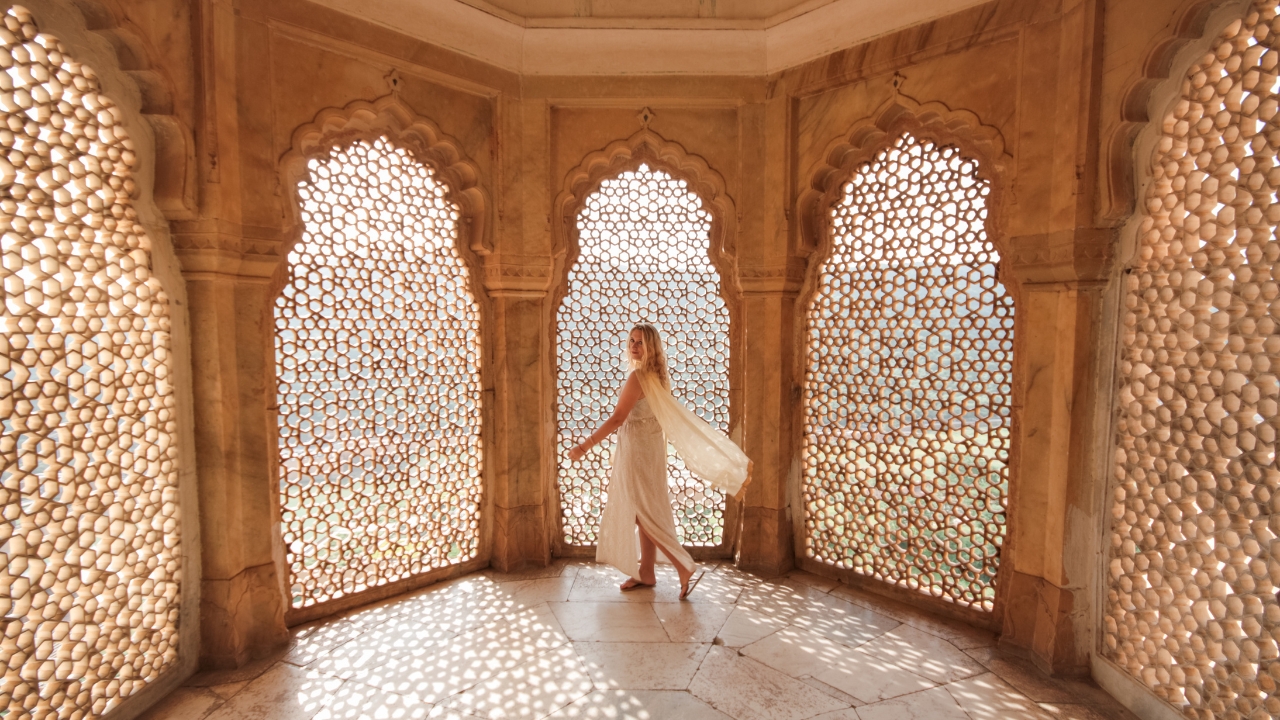
The palace is a rectangular structure built entirely of red sandstone, rising over five storeys from the lakebed. Its facade is marked by beautifully carved balconies with intricate jali screens, arched gateways with decorative spandrels, and a rooftop terrace framed by delicate chhatris at each corner — the hallmark domed pavilions of Rajput palace architecture. The symmetry of the design is precise and deliberate, reflecting a deep understanding of proportion that characterises the finest buildings of the period.
The rooftop — the only part clearly visible when the lake is full — once housed the famous Chameli Bagh, a Mughal-style garden laid out in a formal pattern. Though the garden no longer exists in its original form, the terrace remains an architectural highlight, offering a platform from which the sweeping views of the lake and Aravalli hills would have been experienced by the royal family.
The four submerged floors of the palace are equally impressive from an engineering standpoint. The walls were constructed using a specially formulated lime mortar that resists water penetration, allowing the structure to remain largely intact after centuries of submersion — a remarkable achievement of pre-modern Indian construction technique.
| Detail | Information |
| Entry Fee (Lakefront / Promenade) | Free |
| Entry Fee (Palace Interior) | Not open to public currently |
| Lakefront Timings | Open all day, accessible 24 hours |
| Best Visiting Hours | 6:00 AM – 9:00 AM / 5:00 PM – 8:00 PM |
| Night Illumination | Begins at dusk, approx. 6:30–7:00 PM |
Viewing Jal Mahal from the lakefront promenade is completely free. The palace interior is currently closed to the public as part of ongoing conservation efforts.
October to March is the ideal season to experience Jal Mahal at its finest. The cool weather makes outdoor time along the lakefront genuinely pleasant, migratory birds fill the lake, and the clear winter sky provides a perfect blue backdrop for photography.
Pro Tip: Jal Mahal sits directly on the Jaipur–Amer road. If you are visiting Amer Fort, Jaigarh Fort, or Galtaji Temple, passing by Jal Mahal twice in a day — once in the morning and once in the evening — gives you two completely different experiences of the same palace.
Currently, the palace interior is not open to the general public. Entry is restricted as part of ongoing conservation efforts. However, the lakefront promenade offers excellent views of the palace from all angles, and the experience of seeing it from the shore is itself the highlight of the visit.
No. Viewing Jal Mahal from the lakefront promenade is completely free for all visitors — Indian and foreign alike — with no tickets or access restrictions.
Jal Mahal has five full storeys, but when Man Sagar Lake is at its fullest — particularly after the monsoon rains — the lower four floors are submerged beneath the waterline, leaving only the topmost storey visible. This is what creates the famous “floating palace” illusion.
Sunrise and sunset are widely considered the two most magical times to see Jal Mahal. The golden morning light and the warm evening glow both bring out the richness of the red sandstone and create stunning reflections on the lake surface. Night visits after illumination are equally beautiful.
Jal Mahal is consistently ranked among the most photographed monuments in India — and with good reason. The combination of the palace, the lake, the Aravalli hills, and the ever-changing quality of light throughout the day makes it a photographer’s paradise at any hour.
Boat rides are periodically available on Man Sagar Lake depending on current government and conservation authority permissions. It is advisable to check locally on arrival or contact Jaipur Tour Planner for the latest status before your visit.
Absolutely. The wide, open lakefront promenade is safe and accessible for all ages. Children enjoy the camel rides, the local vendors, and the open space around the lake. It is one of Jaipur’s most family-friendly sightseeing spots.
Most visitors spend 30–45 minutes at Jal Mahal for sightseeing and photography. If you plan to stroll the promenade, browse the local stalls, enjoy street food, and watch the sunset and evening illumination, budget 1.5 to 2 hours for a relaxed visit.
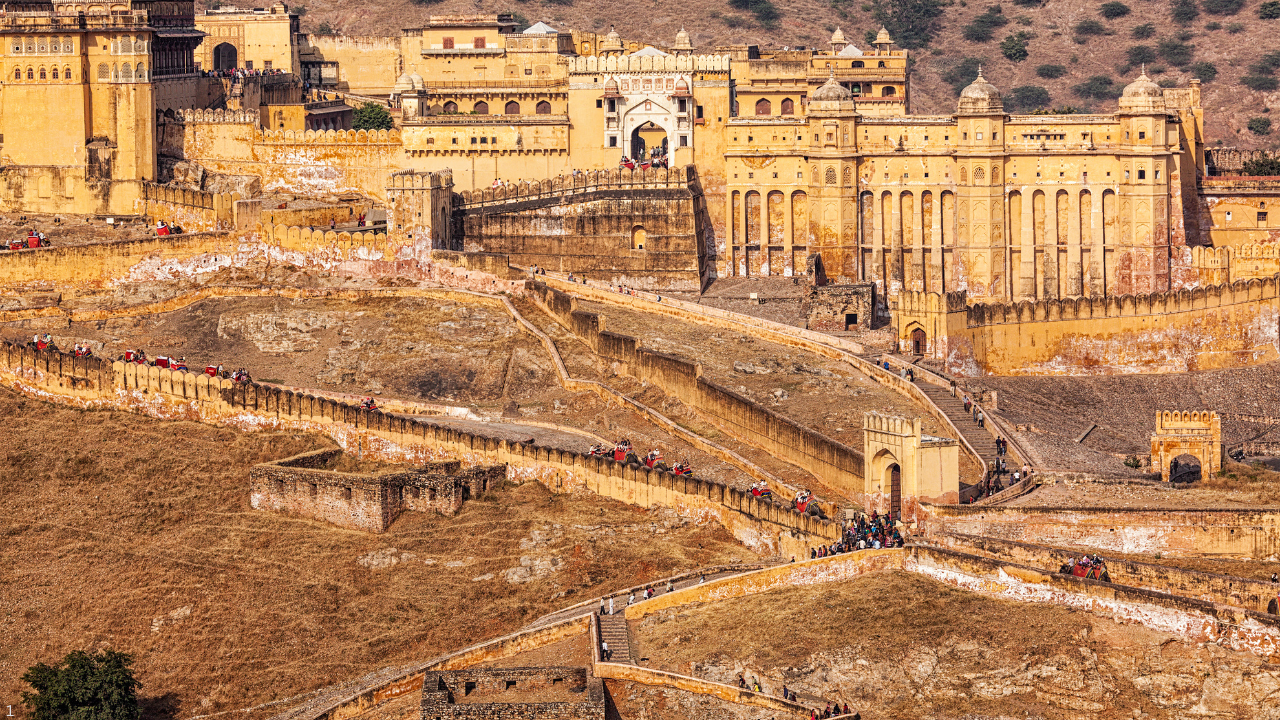
Amer Fort (4 km), Kanak Vrindavan Garden (1.5 km), Galtaji Temple (8 km), Jaigarh Fort (6 km), and Nahargarh Fort (6 km) are all within easy reach — making Jal Mahal a natural anchor point for a full day of Jaipur sightseeing.
Absolutely. Jaipur Tour Planner includes Jal Mahal as part of curated Jaipur city and heritage tours — pairing it with the best nearby attractions for a perfectly planned day. Contact us to book your personalised Jaipur tour today.
Address: Amer Road, Jal Mahal, Amer, Jaipur, Rajasthan – 302002 Nearest Landmark: Kanak Vrindavan Garden / Amer Road

Nothing Match your search terms. Please try again with some different keywords.