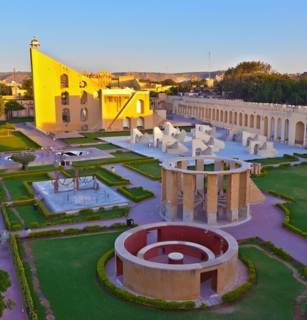
Jantar Mantar in Jaipur is an astronomical observatory built in the 18th century by Maharaja Jai Singh. It is the largest of the five observatories built across India. This architectural and scientific marvel displays an array of advanced instruments designed to measure celestial objects, ascertain time, and predict planetary movements. It continues to inspire awe as a testament to ancient ingenuity and advanced astronomical understanding.
Among the many historical sites in India, Jantar Mantar stands as a symbol of human curiosity and astronomical brilliance, showcasing the advanced knowledge and engineering of its time. This remarkable observatory, with its intricate design and significant contribution to the field of astronomy, continues to attract visitors. The 19 carefully designed instruments with artistic precision reflect Jai Singh’s brilliance in both astronomy and architecture, leaving visitors in awe of the architectural marvel that is Jantar Mantar.
The 27-metre-high and 44-metre-wide Samrat Yantra, for instance, is a testament to the genius of Gayatri Jai Singh and provides remarkable accuracy in time measurement. Other instruments like the Ram Yantra, Nadi Valay Yantra and Laghu Samrat Yantra contribute to the complexity of the observatory. Each of these instruments served a specific purpose, such as measuring the altitude of celestial bodies, determining the time of day, and predicting the positions of stars and planets. Visitors will learn about the scientific and cultural significance of Jantar Mantar and enhance the experience.
History
If you want to enjoy the grandeur of Jantar Mantar, it is very important to know about its history. It was built between 1728 and 1734 by a brilliant astronomer and mathematician, Sawai Jai Singh. Singh, who was influenced by global astronomical practices, used geometric forms and mathematical principles in the design. With the help of local astronomers and engineers, he designed and built the observatory to study and understand celestial motions, astrological events, and time calculations.
Architecture
The instruments of the observatory, made of stone and brass, enhance the beauty of the structures with intricate floral designs, geometric patterns, calligraphy and inscriptions. The layout of the observatory is carefully aligned with the cardinal directions, the Indian architectural system and Vastu Shastra. Jantar Mantar is an architectural marvel and a symbol of scientific and cultural significance. The architectural style of the observatory is unique, combining elements of traditional Indian, Persian, and European design. The unique features of the architecture, such as the precision of the instruments and the alignment with cardinal directions, make Jantar Mantar a must-see for architecture enthusiasts.
Cultural Significance
Every traveller to Jaipur cannot leave without visiting Jantar Mantar as it has immense cultural significance, reflecting different civilisations and their cosmological beliefs. Jai Singh’s court, a centre for scholars from different fields and religions, is a place people love to visit. Jantar Mantar, apart from being a relic of the past, is also an important part of our heritage that helps educate people. It is an important cultural site that reflects the influences of Mughal, Rajput and Persian architecture, connecting visitors to the rich heritage and diverse influences of the past.
Enriching Activities & Experiences
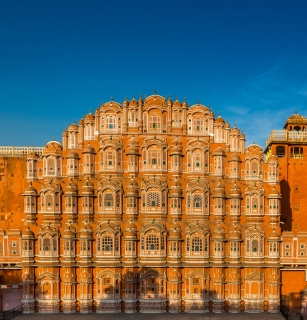
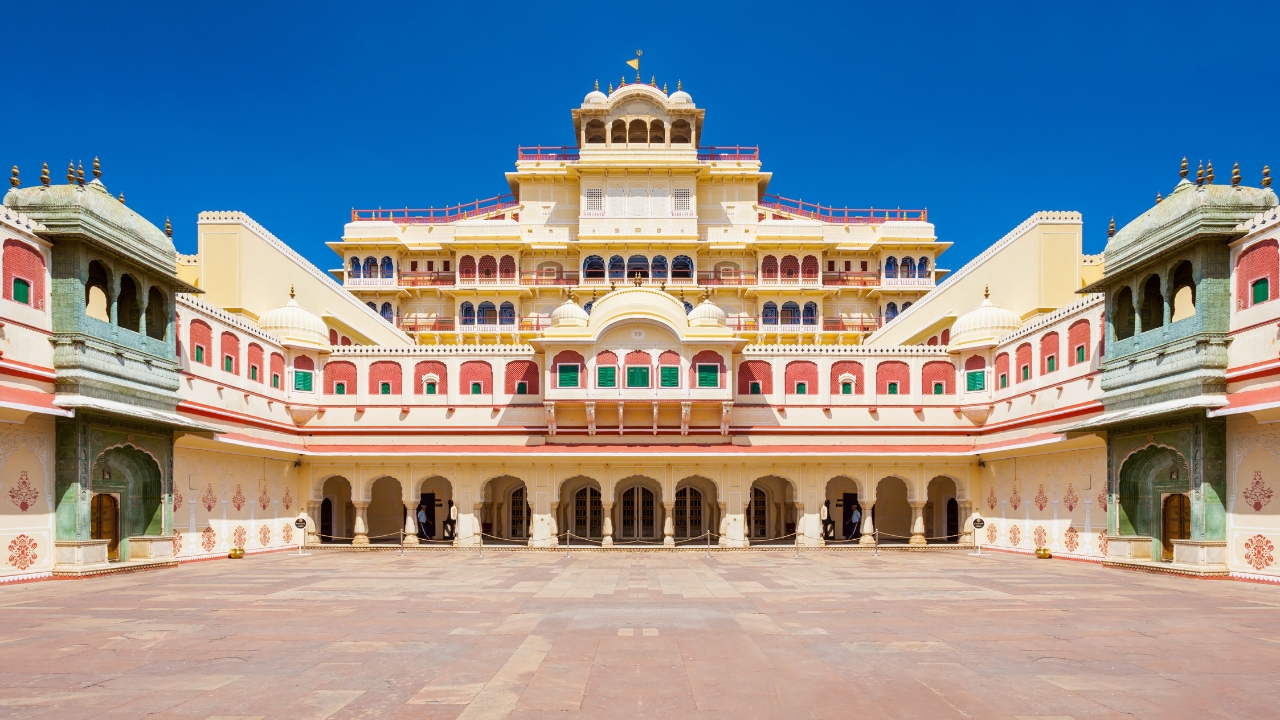
Jantar Mantar offers a rich experience for visitors, with light and sound shows every evening that connect you with the legacy of the visionary ruler. You can also visit attractions like City Palace and Hawa Mahal, and experience events like World Heritage Day, International Kite Festival, World Astronomy Day, Jaipur Literature Festival and World Tourism Day. These experiences, coupled with fascinating stories related to history and astronomical knowledge, make a visit to Jantar Mantar an exciting and enriching experience.
Entry Fee And Timings
The entry fee to Jantar Mantar Jaipur is different for Indian and foreign nationals. The fees for Indian visitors are ₹50 while for foreign nationals it is ₹200. Children below the age of 15 can visit the observatory for free. The timining of this place is from 9:00 am to 4:30 pm. For those interested in an additional immersive experience, the observatory also organises a light and sound show in the evenings.

One Day Tour

2 Day Tour

3 Day Tour
One Day Tour

Day Tours

1 Day
One Day

One Day