About Panna Meena Ka Kund
Most visitors to Amer walk straight past it without realising it exists. Tucked quietly behind the busy road that leads to Amer Fort, Panna Meena Ka Kund is one of the most remarkable and most overlooked architectural treasures in all of Jaipur. It is a stepwell — locally called a baori or kund — and it is nothing short of a geometric masterpiece carved in pale yellow sandstone.
Step up to its edge and look down, and the sight stops you in your tracks. Eight storeys of perfectly symmetrical, crisscrossing staircases descend in a mesmerising zigzag pattern into the depths below — a living optical illusion in stone, designed not by a computer but by craftsmen working purely from mathematical intuition and centuries of inherited skill. The staircases don’t just go straight down — they intersect, overlap, and mirror each other on three sides of the square well, creating a pattern so precise and so hypnotic that it feels almost impossible to have been built by hand.
And yet, here it stands — over 450 years old, largely intact, and more beautiful than ever.
Panna Meena Ka Kund is Jaipur’s finest stepwell and one of the most photogenic spots in Rajasthan. It has become a favourite destination for architecture lovers, history enthusiasts, and photographers — and increasingly, for anyone who wants to experience a side of Jaipur that goes far beyond the obvious. Once you have seen it, it is very hard to forget.
The story of Panna Meena Ka Kund begins in the 16th century, during the reign of Maharaja Jai Singh I, when the town of Amer was the thriving capital of the Kachwaha dynasty. Water was the most precious resource in this arid landscape, and the construction of stepwells — large, engineered reservoirs designed to harvest and store monsoon rainwater — was considered both a civic duty and an act of great merit.
This particular stepwell was built specifically to serve the growing population of Amer town and the temples and royal households surrounding the fort. It served as the primary source of drinking water for the community, a bathing facility, a resting place for travelling merchants and saints — and perhaps most importantly, a social hub. Women from the town would gather here daily to draw water, and the kund became a natural meeting place for community life, conversation, and ceremony.
The name itself carries the mystery of legend. Two stories have been passed down through generations. The most commonly told account attributes the kund to Panna Miah — a eunuch who served in the royal court of Maharaja Jai Singh and commissioned the stepwell as an act of public welfare. A second tradition links the name to Panna Meena — a chieftain of the Meena tribe, the original inhabitants of the Amer region — who is said to have overseen its construction. The exact truth has been absorbed into the fabric of local legend, and both stories are part of what gives the kund its distinctive character.
In the centuries that followed, as piped water became available and the practical need for stepwells diminished, Panna Meena Ka Kund slowly transitioned from a functional water source to a heritage site. It has been maintained by the local municipal body for the past several decades, and its architecture remains in remarkably good condition — a quiet testament to the quality of craftsmanship that went into its original construction.
Panna Meena Ka Kund is, above all else, an architectural wonder — and understanding its design makes the experience of visiting it infinitely richer.
The kund is a square stepwell structure, eight storeys deep, built from pale yellow Rajasthani sandstone and finished with lime plaster. The well descends approximately 20 metres into the earth, and its walls are structured to allow access to water at every level — crucial in a desert climate where water levels fluctuate dramatically between seasons.
What makes its design extraordinary is the staircase system. Rather than a single straight flight of steps descending to the water, the kund features a complex network of crisscrossing staircases on three of its four sides — creating an intricate geometric pattern that is deeply satisfying to the eye and genuinely clever in its engineering logic. Each staircase intersects with others at multiple levels, creating a web of paths that allow many people to descend, draw water, and ascend simultaneously without congestion — a brilliant solution to what was essentially a community water management challenge.
There is also a fascinating local tradition around the staircases — the belief that you cannot use the same staircase to walk down and walk back up. Once you descend by one path, you must find a different route to ascend. This is not merely folklore — the design of the intersecting staircases genuinely makes it easy to lose track of your original route, adding an element of playful disorientation to the visit.
The fourth side of the kund — the northern face — features a small room or pavilion rather than steps, which provided shade and a resting place for those who came to draw water. Small decorative niches are carved into the staircase walls at various levels, adding an aesthetic dimension to what was primarily a functional structure. Octagonal gazebo-like structures at the upper levels complete the design, giving the kund an elegant, almost ornamental appearance when viewed from above.
The entire composition, when seen from the top looking down, is a breathtaking geometric puzzle — one that architects, photographers, and mathematicians find equally compelling.
| Detail | Information |
| Entry Fee | Completely Free |
| Photography | Free |
| Timings | 7:00 AM – 6:00 PM (All Days) |
| Best Visiting Hours | 7:00 AM – 10:00 AM / 4:00 PM – 6:00 PM |
Panna Meena Ka Kund is a public heritage site — free to visit for all visitors, Indian and foreign alike, with no ticket counters or access restrictions.
Important Note: Visitors are generally advised not to descend the staircases all the way to the lower levels, as the deeper steps can be slippery and uneven. The view from the top and the first few accessible levels is the main experience — and it is more than enough.
October to March is the ideal season to visit Panna Meena Ka Kund. Cool, comfortable weather makes exploring the open-air site pleasant, and the soft winter light creates beautiful photographic conditions.
Best time of day: Early morning between 7–10 AM for soft golden light and minimal crowds. Late afternoon from 4–6 PM is also excellent for photography as the low sun casts dramatic diagonal shadows across the staircases.
Avoid: Midday visits in summer months. The open sandstone can become very hot underfoot and the harsh overhead light is not ideal for photography.
A stepwell — locally called a baori or kund — is an ancient water storage and management structure built to harvest monsoon rainwater and maintain a reliable water supply through dry seasons. Panna Meena Ka Kund was built in the 16th century to supply drinking water to the residents of Amer town, the royal households, and the temples surrounding Amer Fort. It also served as a community gathering space, a bathing facility, and a resting place for travellers.
No. Entry to Panna Meena Ka Kund is completely free for all visitors — Indian and foreign alike — throughout the year. There are no tickets, no counters, and no access restrictions.
The name comes from local legend, with two competing stories. One tradition credits Panna Miah — a eunuch in the royal court of Maharaja Jai Singh — with commissioning the stepwell as an act of public welfare. Another attributes it to Panna Meena, a chieftain of the Meena tribe who are considered the original inhabitants of the Amer region. The true origin has been absorbed into legend, and both stories are part of the kund’s rich local identity.
Yes — this is one of the most fascinating aspects of Panna Meena Ka Kund. The crisscrossing staircase design is deliberately complex enough that once you descend via one path, navigating back up via the same route is genuinely difficult. The design was both functional — allowing many people to access water simultaneously — and has become one of the kund’s most talked-about features.
Visitors can access the upper levels and the first few tiers of the staircases. The deeper lower levels are generally advised against, as the older stone steps can be uneven and slippery. The most spectacular view — of the full geometric staircase pattern — is actually from the top looking down, so you lose nothing by staying at the upper levels.
Most visitors spend 30 to 45 minutes at the kund — enough to take in the architecture, explore the accessible levels, and spend time photographing it from different angles. If you are a serious photographer or architecture enthusiast, you may wish to linger longer.
Panna Meena Ka Kund is widely considered one of the finest photography locations in all of Jaipur and Rajasthan. The geometric perfection of the staircases, the warm pale yellow sandstone, and the interplay of light and shadow throughout the day make it endlessly compelling for photographers of every level — from smartphone snapshots to professional architectural photography.
Unlike Amer Fort nearby, Panna Meena Ka Kund remains refreshingly uncrowded on most days. Even during peak tourist season, you are unlikely to encounter large crowds here — one of the many reasons it is so beloved by those who discover it.
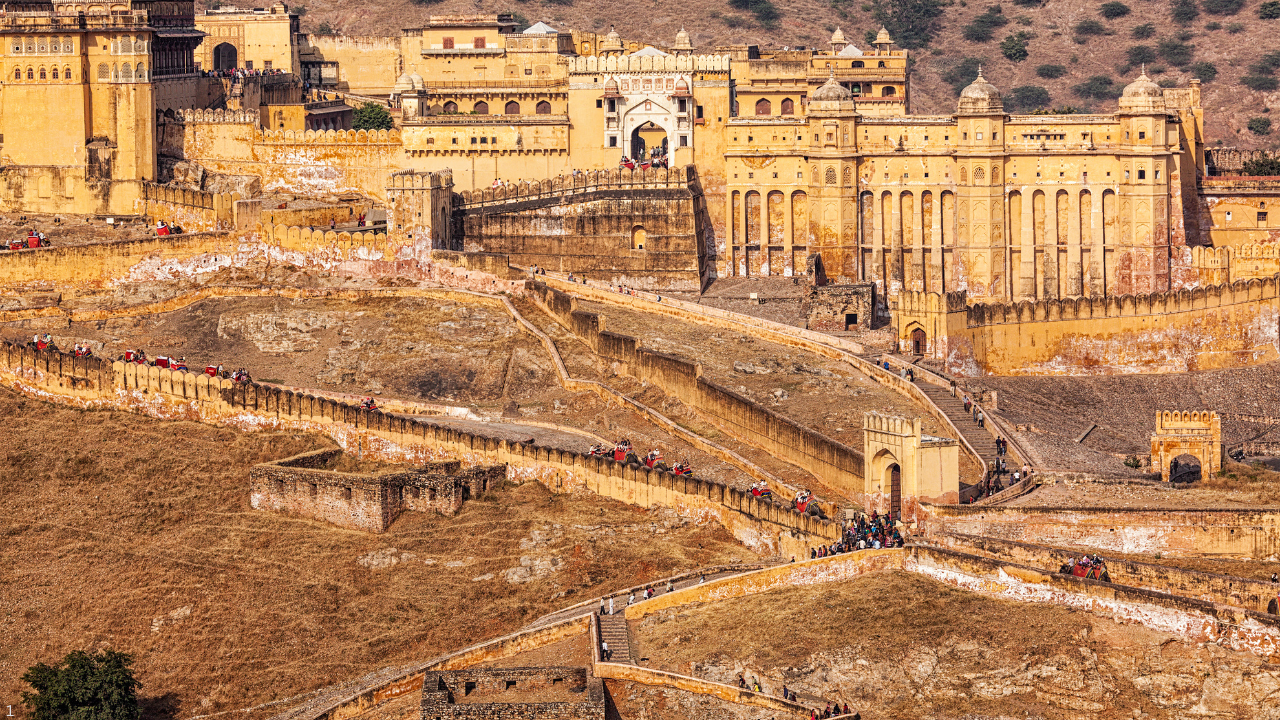
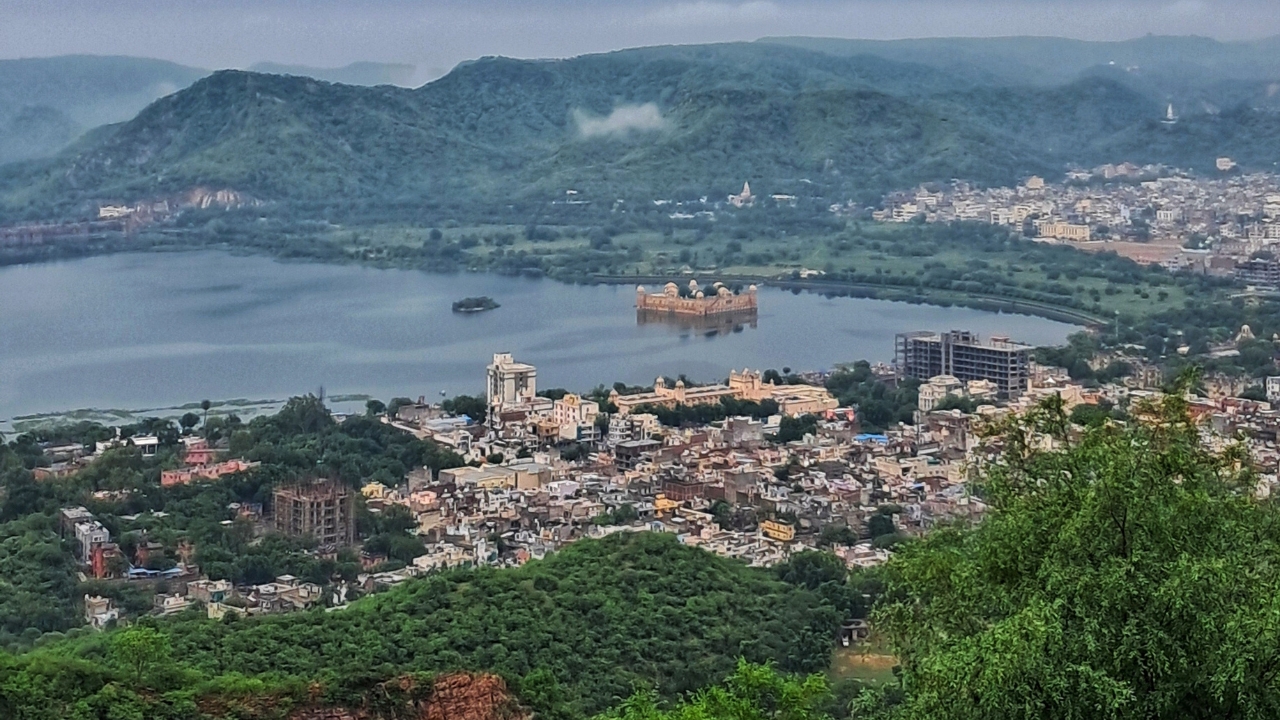
Absolutely. Jaipur Tour Planner recommends including Panna Meena Ka Kund as part of a full Amer heritage day — pairing it with Amer Fort, Jaigarh Fort, Jal Mahal, and Galtaji Temple for a perfectly rounded day of history, architecture, and natural beauty. Contact us to plan your personalised tour.
Comfortable, closed-toe footwear with good grip is strongly recommended — the sandstone steps can be smooth and slippery, particularly at the lower levels. Light, breathable clothing is ideal. Carry water, especially in the warmer months, as there are no refreshment facilities inside the kund itself.
Address: Near Kheri Gate, Amer Town, Jaipur, Rajasthan – 302028 Nearest Landmark: Ambikeshwar Mahadev Temple / Anokhi Museum of Hand Printing

Nothing Match your search terms. Please try again with some different keywords.