


The Complete Travel & History Guide to Rajasthan’s Mightiest Fortress
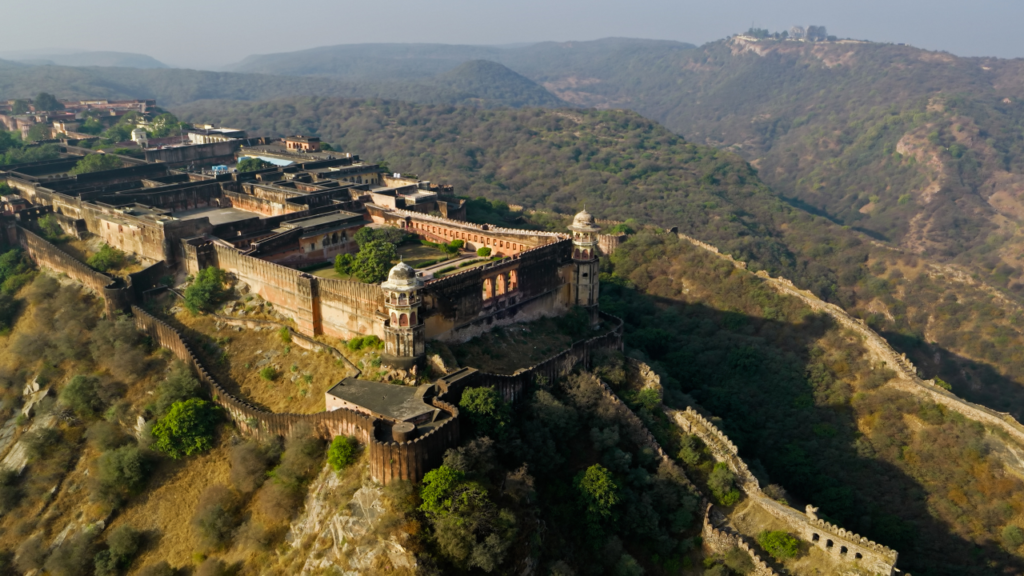
If you’ve ever stood on the rugged Aravalli hills outside Jaipur and felt the wind carry centuries of Rajput valor, chances are you were near Jaigarh Fort. Perched 500 feet above the Pink City, this formidable citadel is not just a monument — it is a living testament to military genius, royal ambition, and untold treasure. Yet, compared to its glamorous neighbor Amber Fort, Jaigarh remains criminally underexplored by most tourists.
In this in-depth guide, we cover everything you need to know about Jaigarh Fort — its history, architecture, the legendary Jaivana cannon, the mystery of its lost treasure, visiting tips, and why it absolutely deserves a spot on your Jaipur travel itinerary.
Quick Facts at a Glance
- Location: Devisinghpura, Amer, Jaipur, Rajasthan 302028
- Timings: 9:00 AM – 4:30 PM (all days)
- Entry Fee: ₹70 (Indians) | ₹200 (Foreigners) | Free for children under 7
- Built: Early 18th century (1726 AD) by Sawai Jai Singh II
- UNESCO: Part of Hill Forts of Rajasthan World Heritage Zone
1. The Powerful History of Jaigarh Fort
Jaigarh Fort was constructed in 1726 AD by Maharaja Sawai Jai Singh II, the visionary ruler who also built the magnificent planned city of Jaipur. The fort was designed specifically to defend the Amer (Amber) kingdom — the seat of Kachchwaha Rajput power — and served as the primary military arsenal and treasury for generations of Jaipur royals.
The name “Jaigarh” literally translates to “Fort of Victory” — Jai meaning victory, and Garh meaning fort. True to its name, Jaigarh never fell to any enemy in its entire history. Unlike many other Rajput forts that witnessed fierce battles and eventual surrender, Jaigarh remained unconquered throughout the Mughal era, the Maratha campaigns, and even during the early British period.
- Strategic Importance in Rajput History
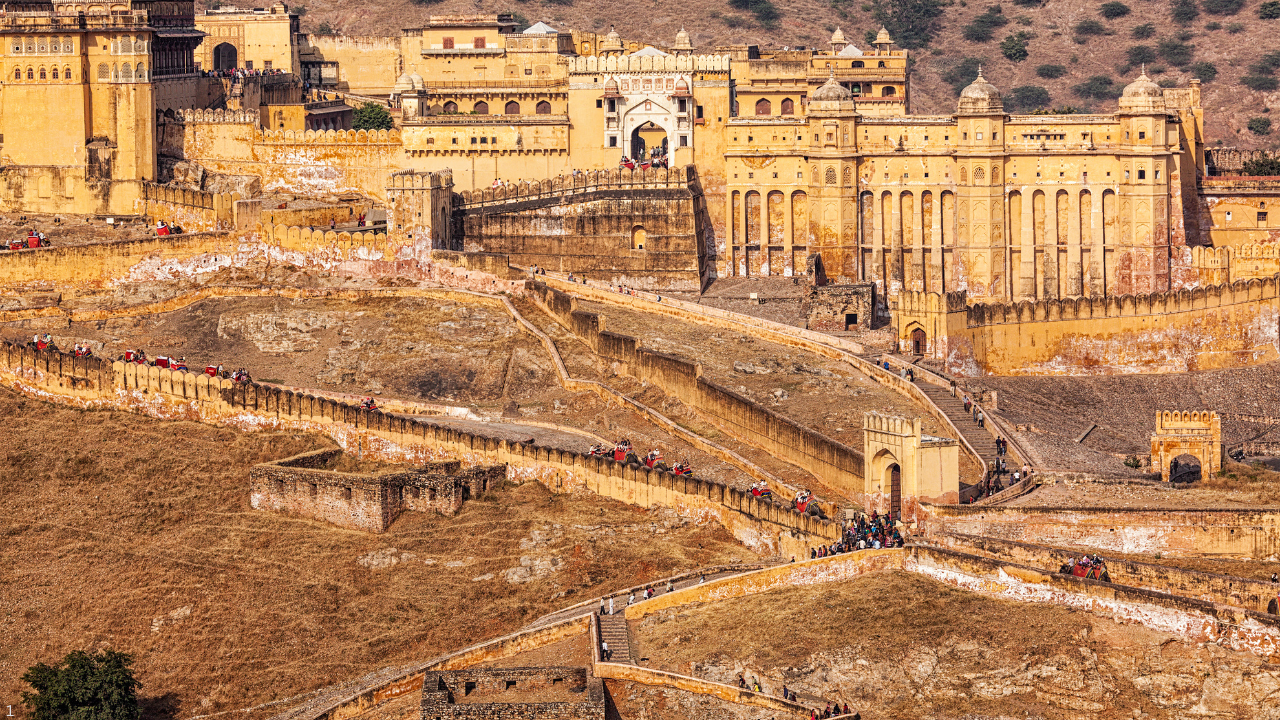
Perched atop the Cheel ka Teela (Hill of Eagles) in the Aravalli Range, Jaigarh Fort was the crown jewel of a three-fortress defense system alongside Amber Fort (below it) and Nahargarh Fort (to the northwest). This triangulated defense structure made Jaipur one of the most militarily secure kingdoms in medieval India.
The fort housed the royal arms manufacturing workshop, cannon foundry, and most critically — the royal treasury. An underground passage connected Jaigarh to Amber Fort below, allowing the royal family to escape and valuables to be transported safely in times of crisis.
2. Architecture of Jaigarh Fort: A Military Masterpiece
Covering an area of approximately 3 km in length and 1 km in width, Jaigarh Fort is massive. Its towering walls — built with red sandstone and lime mortar — stretch for miles along the Aravalli ridgeline. The fortification includes multiple layers of defensive walls, each capable of withstanding cannon fire and siege warfare.
Key Structures Inside the Fort
- Doongar Darwaza (Main Entrance Gate): The imposing entrance that once witnessed royal processions and military parades. The sheer scale of this gate gives you an immediate sense of the fort’s grandeur.
- Awani Darwaza & Dhruv Pol: Secondary gates that served as checkpoints for controlling access to the inner fort.
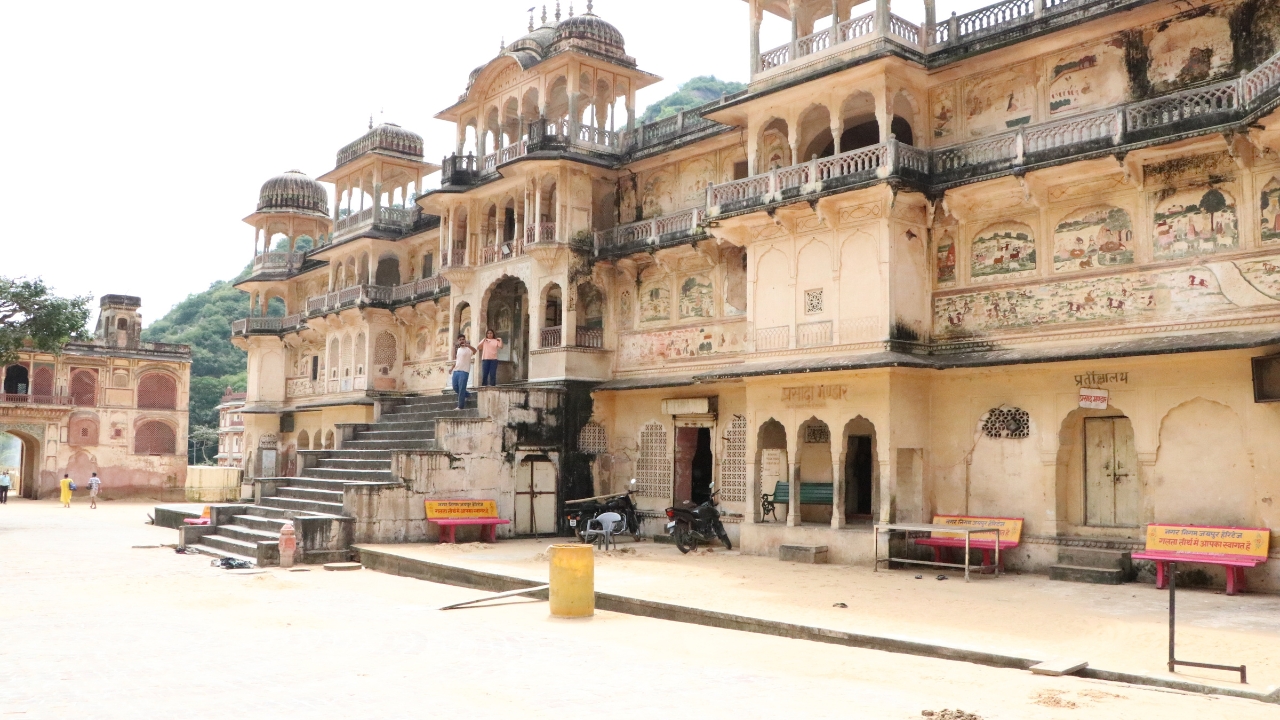
- Laxmi Vilas, Lalit Mandir & Vilas Mandir: Three interconnected palaces within the fort that once served as royal residences during military campaigns. These palaces feature beautifully painted interiors with Rajput murals.
- Aram Mandir Garden: A formal Mughal-style garden that provided a peaceful retreat for the royal family amidst the stern military environment of the fort.
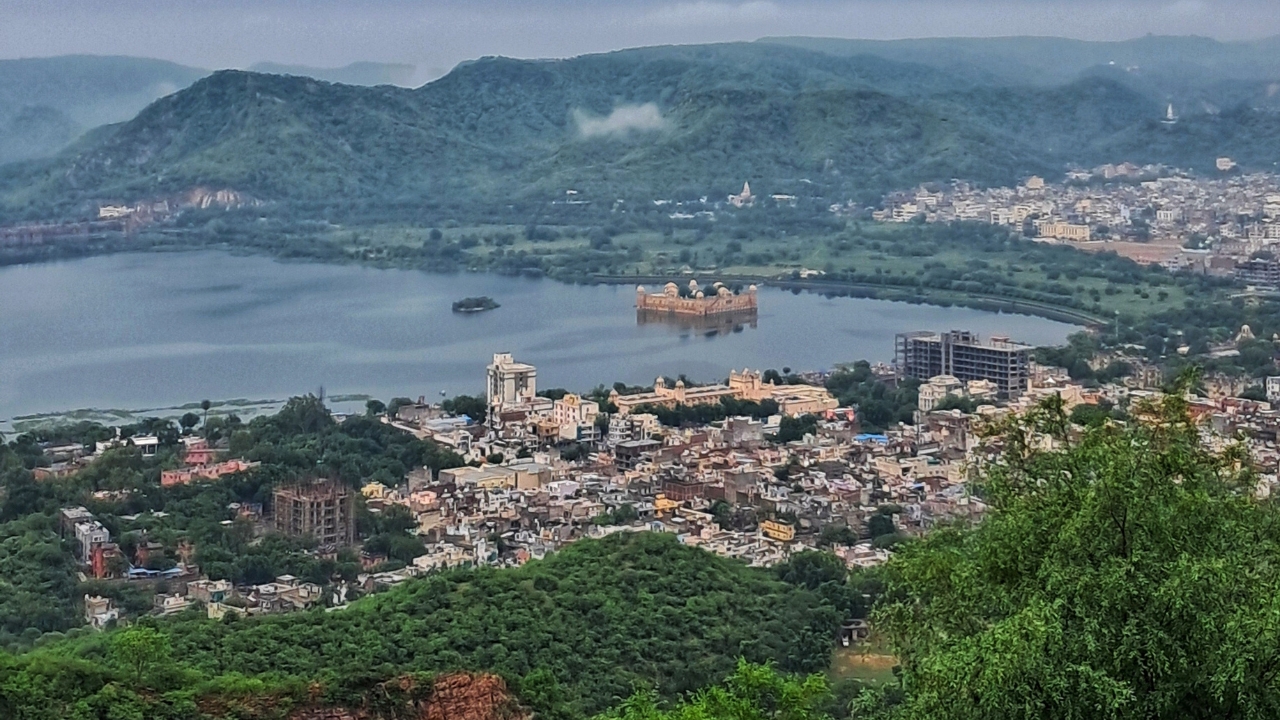
- Subhata Niwas: A rest house that offered stunning panoramic views of the surrounding Aravalli hills and Maota Lake.
- The Museum: Houses an impressive collection of medieval weapons, armor, photographs of the royal family, palanquins, and ancient puppets that tell the story of Rajasthan’s martial heritage.
3. Jaivana Cannon — The World’s Largest Cannon on Wheels
Without question, the most jaw-dropping sight at Jaigarh Fort is the Jaivana Cannon — officially recognized as the world’s largest cannon on wheels. Cast in 1720 AD right here at the fort’s own cannon foundry, the Jaivana stands as a marvel of 18th-century metallurgical engineering.
| Specification | Detail |
| Length | 6.15 meters (20.2 feet) |
| Weight | 50 tonnes |
| Barrel Diameter | 28 cm (11 inches) |
| Ammunition | 50 kg cannonballs |
| Range | 35 km (when fired in test) |
| Year Cast | 1720 AD |
| Times Fired in Battle | Only once — as a test fire |
The cannon was transported on a specially built wooden cart with giant wheels — a feat of engineering that required 4 war elephants to move. It was fired only once in history, as a test, and the cannonball reportedly landed near Chaksu, about 35 km away! The sheer firepower of the Jaivana meant that no enemy ever dared attempt to storm Jaigarh — the cannon’s reputation alone served as a powerful deterrent.
4. The Mystery of Jaigarh Fort’s Hidden Treasure
No discussion of Jaigarh Fort is complete without addressing its most tantalizing legend — the hidden treasure. For centuries, locals and historians have whispered about an enormous royal treasury hidden somewhere beneath the fort’s thick stone floors.
The story goes that Aurangzeb, after failing to conquer Amber and Jaipur, struck a deal with the Kachchwaha Rajputs. Under the agreement, the Rajputs were required to hand over a portion of their treasury. However, historians believe that the royal family secretly buried the bulk of their wealth — gold, silver, gems, and war spoils — within the fort before making this handover.
In 1975-76, during Indira Gandhi’s Emergency period, the fort was cordoned off by government agencies for an extensive excavation. The operation was kept highly secretive, and the exact findings — if any — were never officially disclosed. The royal family of Jaipur maintained that no treasure was found. But the mystery persists, and the underground chambers of Jaigarh continue to fuel imaginations.
5. How to Visit Jaigarh Fort: Complete Practical Guide
Best Time to Visit
October to March is the ideal window to visit Jaigarh Fort. The Rajasthan winters are pleasantly cool, making the uphill walk manageable and the views crystal clear. Avoid May and June when temperatures in Jaipur can cross 44°C — the exposed fort offers little shade and the stone walls radiate intense heat.
Pro Tip: Visit early morning (9-10 AM) on weekdays to avoid weekend crowds and enjoy the serene atmosphere. Sunset views from the fort walls are breathtaking — plan your exit accordingly.
How to Reach Jaigarh Fort
- By Car / Taxi: The most convenient option. From Jaipur city center, it’s approximately 14-15 km via Amer Road. Taxis and auto-rickshaws are readily available. Parking is available outside the fort.
- By RSRTC Bus: Take any bus toward Amer from Sindhi Camp Bus Stand or Badi Chaupar. Alight at Amer and then hire a local auto-rickshaw for the uphill drive to Jaigarh.
- Combined Route: The most popular option among tourists — visit Amber Fort first (at the base), then take the road that winds uphill to Jaigarh. The two forts share a connected pass and can be covered together in a single day.
- On Foot: Experienced hikers can trek from Amber Fort up to Jaigarh via the ancient path — a moderately challenging 30-minute climb that rewards you with incredible views.
Entry Tickets & Timings
The fort is open every day from 9:00 AM to 4:30 PM. Entry fees are nominal — ₹70 for Indian nationals and ₹200 for foreign tourists. Photography is allowed inside the fort. Jaigarh is also covered under the composite ticket that includes Amber Fort and Nahargarh Fort, which offers excellent value for multi-fort explorers.
What to See & Insider Tips
- Spend at least 2-3 hours at the fort — it’s larger than it appears from outside.
- Don’t miss the museum — it has rare medieval weaponry, royal memorabilia, and a fascinating puppet collection.
- Climb the watchtower for a 360-degree panoramic view of Jaipur city, Maota Lake, and the surrounding hills.
- Explore the cannon foundry area — you can see the molds and tools used to cast cannons.
- The underground chambers and water tanks are worth exploring for the engineering marvel they represent.
- Carry water and snacks — the fort has limited refreshment options inside.
6. Why Jaigarh Fort Deserves More Visitors
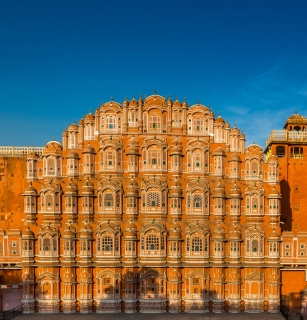
Most Jaipur tourists rush through the Golden Triangle — Amer Fort, City Palace, Hawa Mahal — and completely overlook Jaigarh. This is a mistake. While Amber Fort dazzles with decorative artistry, Jaigarh hits differently. Here, you feel the raw, unfiltered power of a military empire at its peak.
Jaigarh is for those who want to go beyond the polished tourist trail. It’s for history buffs who want to stand where cannon foundry workers once toiled, for photographers chasing dramatic fortifications and sweeping hilltop vistas, and for travelers who believe the best stories lie off the beaten path.
As part of the Hill Forts of Rajasthan cluster recognized by UNESCO, Jaigarh Fort represents one of the finest examples of Rajput military architecture in the world. Its authenticity — relatively unchanged and uncommercialized compared to other forts — makes it an absolute gem.
Frequently Asked Questions (FAQs)
Q1: Is Jaigarh Fort the strongest fort in India?
Jaigarh Fort is widely considered one of the strongest and most impregnable forts in India. It was never captured by any enemy throughout its history — a distinction very few forts in India can claim. Its multi-layered walls, strategic hilltop location, massive water reservoirs, and the Jaivana cannon together created a defense system that was virtually impossible to breach. While other forts like Chittorgarh and Mehrangarh are equally celebrated, Jaigarh’s unblemished record of never falling makes it uniquely formidable.
Q2: Can I visit Jaigarh Fort and Amber Fort on the same day?
Yes, absolutely! In fact, visiting both forts together is the most popular option among travelers. Amber Fort and Jaigarh Fort are connected by a road that winds up the Aravalli hills, making it very convenient to cover both in a single day. Start with Amber Fort in the morning (it tends to be busier and more elaborate), then make your way up to Jaigarh Fort afterward. Allow 2-3 hours for each fort. A composite ticket is available that covers both forts at a discounted combined price. Together, the two forts present a complete picture of Kachchwaha Rajput power — one diplomatic and artistic, the other military and strategic.
Q3: What is the hidden treasure of Jaigarh Fort? Was it ever found?
The hidden treasure of Jaigarh Fort refers to a legendary royal treasury believed to have been buried by the Kachchwaha Rajputs — possibly to protect their wealth from Mughal demands. The legend gained national attention in 1975-76 when the Indian government, under the Emergency government of Prime Minister Indira Gandhi, ordered a covert excavation of the fort. The operation was conducted under heavy secrecy and lasted several months. The official conclusion was that no significant treasure was discovered. However, the Jaipur royal family and several historians have raised questions about the transparency of this operation. To this day, the treasure mystery remains unresolved — and it adds a delicious layer of intrigue to any visit to Jaigarh.
Q4: What is so special about the Jaivana cannon at Jaigarh Fort?
The Jaivana Cannon is recognized as the world’s largest cannon on wheels, making it a genuine world record holder. Cast in 1720 AD at the fort’s own foundry, it weighs 50 tonnes and measures over 6 meters in length. Its barrel can fire a 50 kg cannonball with an estimated range of up to 35 kilometers. What makes it even more remarkable is that the Jaivana was fired only once in recorded history — as a test — and was never used in actual warfare. The shot supposedly created a small lake near the landing point, kilometers away. The cannon sits mounted on a huge wooden and iron wheeled carriage and is the single most photographed object at Jaigarh Fort.
Q5: Is Jaigarh Fort worth visiting? How long should I plan for?
Jaigarh Fort is absolutely worth visiting, especially if you are interested in history, military architecture, or Rajput heritage. It is less crowded than Amber Fort and offers a more immersive and authentic experience. Plan a minimum of 2 hours and ideally 3 hours to properly explore the fort. This gives you time to walk the ramparts, see the Jaivana cannon, visit the museum, explore the palaces, and enjoy the panoramic views. History enthusiasts and photographers can easily spend a full half-day here. Combining it with Amber Fort below makes for a perfect full-day Jaipur experience that captures both the cultural elegance and military might of the Kachchwaha kingdom.
Final Thoughts: Jaigarh Fort Awaits You
Jaigarh Fort is not just a historical relic — it is an experience. The moment you stand atop its ancient battlements, with the Aravalli wind in your face and centuries of Rajput valor beneath your feet, you understand why this fortress was truly undefeatable. The Jaivana cannon’s silent presence, the mysterious underground chambers, the impeccably engineered water system, and the sweeping views of Jaipur city far below — it all comes together into something extraordinary.
Whether you are a first-time visitor to Jaipur or a seasoned Rajasthan traveler, make Jaigarh Fort a priority on your itinerary. You won’t regret it.
🏰 Plan Your Visit to Jaigarh Fort Today!
Book your Jaipur travel package and make Jaigarh Fort the highlight of your Rajasthan journey.
Open: 9 AM – 4:30 PM | Entry: ₹70 (Indian) / ₹200 (Foreign)